This is default featured post 1 title

Go to Blogger edit html and find these sentences.Now replace these sentences with your own descriptions.This theme is Bloggerized by Lasantha Bandara - Premiumbloggertemplates.com.

This is default featured post 2 title

Go to Blogger edit html and find these sentences.Now replace these sentences with your own descriptions.This theme is Bloggerized by Lasantha Bandara - Premiumbloggertemplates.com.

This is default featured post 3 title

Go to Blogger edit html and find these sentences.Now replace these sentences with your own descriptions.This theme is Bloggerized by Lasantha Bandara - Premiumbloggertemplates.com.

This is default featured post 4 title

Go to Blogger edit html and find these sentences.Now replace these sentences with your own descriptions.This theme is Bloggerized by Lasantha Bandara - Premiumbloggertemplates.com.

This is default featured post 5 title

Go to Blogger edit html and find these sentences.Now replace these sentences with your own descriptions.This theme is Bloggerized by Lasantha Bandara - Premiumbloggertemplates.com.

Showing posts with label Politics News. Show all posts

Thursday, April 1, 2010

U.S. President Obama: 'Wait and see what happens'

President Obama | U.S President | Nation Still Divided On Health Reform | US News | American Citizen | U.S Health | American Health News | Health Care Reform America | US health Care Reform | Senate Republican leader | Congressional Republicans | America Democratic National Committee

PORTLAND, Maine — President Obama urged Americans not to judge the nearly $1 trillion health care legislation he signed into law last week until the massive policy changes take hold.

During an enthusiastic, campaign-style appearance in Maine's largest city, Obama mocked the pundits and pollsters who say he isn't getting a boost from his year-long campaign to pass the sweeping legislation.

"Every day since I signed reform into law, there's another poll or headline that says, 'Nation still divided on health reform, no great surge in public support,' " Obama said. "It's been a week, folks. So before we find out if people like health care reform, we should wait to see what happens when we actually put it into place. Just a thought."

The law extends health coverage to 32 million people who are uninsured and will shape how almost every American receives and pays for medical treatment. Some aspects of the plan go into effect this year, but Obama has said it could take four years for all the changes to take hold "because we need to do it responsibly and we need to get it right."

Obama's trip to Portland took him to the home state of two moderate Republican senators, Susan Collins and Olympia Snowe, whose votes for the legislation the president ardently sought but ultimately could not win. The White House said both senators were invited to attend the event, but neither did.

During the speech, one in a series of appearances to sell the health law, Obama focused on his plan's short- and long-term impact on small businesses, many of which have suffered during the economic downturn.

Under the plan, businesses that have 25 or fewer employees with average annual wages of less than $50,000 will receive tax credits this year if they provide health care coverage to their workers. Those credits are expected to increase by 2014, with 4 million small businesses benefiting, according to the White House.

"This health care tax is pro-jobs, it's pro-business, and it starts this year," Obama said.

Also starting in 2014, companies with up to 100 employees will be able to buy insurance through new state-based purchasing pools, or exchanges, with the goal of giving small businesses the same kind of purchasing power as larger companies. About 22 million self-employed Americans will also be able to buy insurance through the exchanges.

Senate Republican leader Mitch McConnell of Kentucky said employers already know the health law will create new mandates.

"The timing couldn't be worse for a bill that will make it even harder to create private-sector jobs, and harder for small businesses to comply with the dozens of new federal boards and a thicket of new rules and regulations," McConnell said.

Congressional Republicans were united against the law and many predict that Democrats who voted for it will be dragged down in the November elections. Some Republicans are calling for repeal, and Obama told opponents of the bill to "go for it."

"If these congressmen in Washington want to come here to Maine and tell small-business owners that they plan to take away their tax credits and essentially raise their taxes, be my guest," he said.

After speaking in Maine, Obama planned to travel to Boston to attend two fundraisers for the Democratic National Committee.

USA Today News

Tags: President Obama, U.S President, Nation Still Divided On Health Reform, US News, American Citizen, U.S Health,American Health News, Health Care Reform America, US health Care Reform, Senate Republican leader, Congressional Republicans, America Democratic National Committee
Wednesday, March 3, 2010

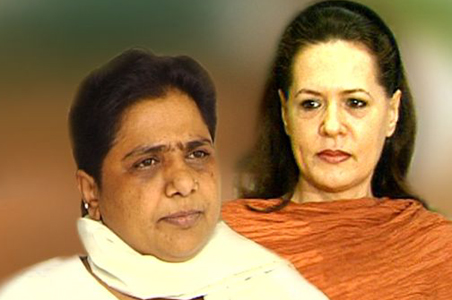
Bridge of Rancour: Mayawati vs Sonia Gandhi


Mayawati plays a game of one up-manship with Sonia Gandhi over a bridge that Indira Gandhi had promised.

An inauguration stone made of cardboard, a paper bridge literally unveiled by the BSP in Lucknow, so what, if the actual bridge is 100 kilometres away in Rae Bareili.

This is a bridge of many twists and turns.

A bridge first promised by Indira Gandhi over 20 years ago, the money sanctioned much later by Sonia Gandhi in 2004 and now in 2010, when it was finally ready, Mayawati wanted to inaugurate it, obviously to stamp a landmark in her name, in the Gandhi constituency.

Hence, a hurried ceremony is a paper victory for Mayawati over the Congress.

The run up to the ceremony were a series of ludicrous events:

In December, Sonia Gandhi inspected the bridge and promised to open it to the public in March. The Mayawati Government hit back saying money might have come from the Centre, but the state built the bridge and a state minister would inaugurate it.

On Wednesday, when a Central Minister came visiting, Mayawati had him stopped 15 kilometres from the site.

About the same time, her close aide Naseemuddin Siddiqui inaugurated the bridge in Lucknow, a whole 24 hours before he was supposed to.

Naseemuddin Siddiqui, Uttar Pradesh PWD Minister says, "We had decided this much earlier. Mayawati was to inaugurate the bridge on her birthday on January 15, but because of the incomplete approach road, it didn't happen.''

R P N Singh, Minister of State, Surface Transport says, "This government is afraid of development. Congress has pledged that it will bring the same development in Uttar Pradesh as it is doing in other parts of the country."

"Inauguration is not a big deal. It doesn't matter who does it, Centre or state. But the problem lies in the fact that the state keeps putting obstacles in our projects", he added.

World over bridges are made to connect people and bring them closer. But perhaps only in Uttar Pradesh where Mayawati rules the state while the Congress is at the Centre can there be a bridge which does just the opposite.


NDtv News

Monday, February 22, 2010

Dick Cheney Hospitalized | Thaddeus Mccotter | Thaddeus Matthews | Dick Cheney In Hospital For Chest Pains

WASHINGTON — Former vice president Dick Cheney was hospitalized after experiencing chest pains Monday, an aide said.

Cheney assistant Peter Long issued a statement that the 69-year-old Cheney was resting comfortably at George Washington University Hospital and his doctors were evaluating the situation.

Cheney has a history of heart problems, including four heart attacks starting at age 37.

When doctors rule out an immediate heart attack, the next step in evaluating chest pain usually is an X-ray exam called an angiogram to help uncover the cause. Doctors inject a dye that will highlight narrowed arteries leading to the heart.

Blockages aren't the only explanation for chest pain. But Cheney had bypass surgery in 1988, as well as two later angioplasties to clear narrowed coronary arteries, and bypasses tend to last about a decade before the rerouted blood vessels start to clog.

In 2001, he had a special pacemaker implanted in his chest. In addition, doctors in 2008 restored a normal rhythm to his heart with an electric shock. It was the second time in less than a year that Cheney had experienced and been treated for an atrial fibrillation, an abnormal rhythm involving the upper chambers of the heart.

The former vice president has kept a high profile since leaving the White House. He has sparred with the Obama administration over plans to close the U.S. detention facility for terror suspects at Guantanamo Bay, Cuba, and hold the trials of several high-profile detainees in civilian courts rather than military tribunals.

He made a surprise appearance last week at the Conservative Political Action Conference, where he accompanied his daughter Liz. He was greeted with chants of "Run, Dick, Run," but said "I am not going to do it."

Among his extensive government service, Cheney served as defense secretary under President George H.W. Bush.

Huffington Post

Tags
: cheney, dick cheney hospitalized, dick cheney hospital, thaddeus mccotter, thaddeus matthews, Dick Cheney Chest Pains, Chest Pain of Dick Cheney, Chest Pain, Former vice president Dick Cheney, Vice President, President Dick Cheney, Vice President Dick Cheney,

Sunday, February 21, 2010

Voters wonder what makes Gov. Dave Paterson run for reelection

Gov. Paterson formally launched his campaign Saturday for a job he plainly doesn't want to do.

He says loudly and passionately he's committed to running the state for four more years, but his actions tell a different story.

If he were truly serious about being New York's chief executive, why does he often roll into the office at 10 a.m. and leave before 5 - as the New York Times reported Friday in its long-awaited profile?

http://assets.nydailynews.com/img/2010/02/21/alg_paterson_fans.jpg

If he were really focused on solving the fiscal crisis, why install an underqualified former girlfriend as deputy director of his Washington office - and compromise his ability to get help from the feds?

Why couldn't his staff track him down for three hours on a Thursday evening after a major plane crash in Buffalo? His explanation is that he was asleep. Doesn't he have a phone?

Being governor of New York is hard. Doing it properly means putting in long hours. It requires being on call 2-4/7. It demands mastering reams of data and policy reports, calling endless meetings, making countless speeches to rally the public and relentlessly twisting arms in Albany.

And - despite occasional bursts of energy and flights of rhetoric - Paterson keeps showing he's just not up to it.

This was the true bombshell of the Times piece - which, contrary to rumors, mongered no scandals, but painted a devastating picture of an isolated, disengaged, mailing-it-in governor.

A governor who cancels speaking engagements without explanation. Who leans on old friends with skimpy credentials as his top advisers while keeping agency heads at arm's length. A governor who lingers with big shots in the Hamptons when his aides are pushing him to get out and meet regular people across the state.

A governor who faces a long-shot battle for the Democratic nomination, yet blows his skimpy campaign funds on fancy dinners at Le Cirque and The Water Club and a personal trip to Florida.

The signs of Paterson's less-than-impressive work ethic were there from his first weeks in office, when he was called upon to negotiate a $120 billion-plus budget.

Facing a steep learning curve and wily, seasoned legislative leaders across the bargaining table, Paterson skipped out of the Capitol not once but twice in the thick of negotiations. First, to celebrate his wife's birthday and again to catch Opening Day at Shea Stadium.

The result, unsurprisingly, was that the Legislature rolled right over the rookie governor and went on a spending spree.

Since then, the gap between Paterson's big talk and small accomplishments has grown ever wider.

He won the support of many New Yorkers by advocating a strong, fiscally conservative response to the recession, but he repeatedly caved to pressure from lawmakers and special interests. Spending, borrowing and taxes have pushed relentessly skyward.

He dramatically demanded sweeping ethics reform at the Capitol, but submitted his proposal too late to get a serious hearing from lawmakers, made only a token effort to sell it, then vetoed the Legislature's weaker bill.

Paterson's Albany remains as corruption-prone and lawless as ever.

He resents the moniker "accidental governor," yet it fits a guy who, through a fluke of history, was thrust into a job he never wanted, wasn't prepared for and had no clue how to handle.

As he admitted last year, being governor "isn't what I signed up for" when Eliot Spitzer plucked him out of the state Senate - with, as it turns out, minimal vetting - to be his running mate.

It's not what he's cut out for, either. And he's unlikely to keep it beyond Dec. 31 - judging from his weak poll numbers, meager fund-raising and the damningly faint praise he gets even from supporters.

NyDaily News

Wednesday, January 27, 2010

Pay As You Go Along | Pay As You Go Laws | What Are Public Service Jobs | What Is Capital Gains Tax | Obama Will Endorse ‘Pay as you go’ Law

President Obama is calling for a so-called paygo law — as in, pay as you go law— that would require Congress to offset the cost of new tax cuts or spending on entitlement programs, like Medicare, with tax increases or spending cuts to avoid adding to the deficit, according to his press office.

The president will make his support clear in his State of the Union address tonight. A major theme of the speech will be his intention — as the economy recovers — to focus on reducing deficits that have become so large that they are a political liability.

Mr. Obama also will confirm that he will create a bipartisan debt-reduction commission and propose a three-year freeze on a one-eighth slice of the budget for domestic spending. The paygo legislation he’s endorsing is a compromise reached among Congressional Democratic leaders; it exempts future extensions of some existing tax cuts for the middle class.

Here’s an excerpt from the White House this morning:

“…In the 1990s, statutory paygo encouraged the tough choices that helped to move the government from large deficits to surpluses, and the President believes it can do the same today. Statutory paygo would hold the government to a simple but bedrock principle: Congress can only spend a dollar if it saves a dollar elsewhere….

“…Both houses of Congress have already taken an important step toward righting our fiscal course by adopting congressional rules incorporating the paygo principle, but we can strengthen enforcement and redouble our commitment by enacting paygo into law.”

Tags: pay as you go, pay as you go along, pay as you go law, pay as you go laws, paygo, what is the pay as you go law, Pay as you, Obama Will Endorse ‘Pay as you go’ Law, Obama News, US President News, President Obama News, America President News, Law News, Tax Law, Tax Law News, Tax News,

Tuesday, January 5, 2010

Dorgan says he will not seek re-election in 2010 | Kent Conrad | Earl Pomeroy | North Dakota Senators | Byron Dorgan Senator | John Hoeven


WASHINGTON (AP) — North Dakota Democrat Byron Dorgan said Tuesday he will not seek re-election to the Senate in 2010, a surprise announcement that dealt another blow to Democrats already struggling to protect their Senate majority.

Dorgan, a moderate who was first elected to the Senate in 1992 after serving a dozen years in the House, said he reached the decision after discussing his future with family over the holidays. Dorgan, 67, said he "began to wrestle with the question of whether making a commitment to serve in the Senate seven more years was the right thing to do."

"Although I still have a passion for public service and enjoy my work in the Senate, I have other interests and I have other things I would like to pursue outside of public life," he said in a statement.

Dorgan's decision stunned members of his party, who control the Senate but are facing spirited challenges from Republicans in several states. Democrats were confident heading into the new year that Dorgan would run for re-election even as rumors intensified that Republican Gov. John Hoeven would challenge him in November.

Early polling showed Dorgan trailing Hoeven in a hypothetical contest, and Democrats expected a competitive race if the matchup materialized.

Hoeven has not announced a candidacy but national Republicans expect he will. Democrats insist they will field a strong candidate to run in Dorgan's place, and recruitment already was underway Tuesday. Democratic Rep. Earl Pomeroy, who was first elected to the House in 1992, could be interested in seeking the Senate seat.

Dorgan's announcement could complicate efforts by Democrats to maintain their advantage in the Senate, where they hold an effective 60-40 majority, including two independents who align themselves with Democrats. That's just enough to break Republican filibusters if all 60 stick together.

Many Democratic incumbents could face challenges in 2010 amid high unemployment rates, concerns about the wars in Iraq and Afghanistan and anger at incumbents.

At least four Democrats, including Majority Leader Harry Reid of Nevada and five-term Connecticut Sen. Chris Dodd, are in serious trouble. Dorgan's decision means Democrats now will have to defend open seats in three states. The others are Delaware and Illinois, where Sens. Ted Kaufman, who has Vice President Joe Biden's old seat, and Roland Burris, who has President Barack Obama's old seat, aren't running for full terms.

Republicans, for their part, are defending six open seats, in Ohio, Florida, Missouri, New Hampshire, Kentucky and Kansas.

Electoral politics aside, Dorgan's decision also could have ramifications for another of Obama's top priorities — climate and energy legislation. With no re-election race and nothing to lose, Dorgan could be even more of a wild card on the issue than he already has been. There's no telling how the moderate Democrat will vote if the Senate takes up the legislation this year.

Representing a large oil and coal-producing state, Dorgan opposes the bill backed by the White House and Democratic leaders that would put a limit on heat-trapping pollution and would allow companies to swap valuable emissions permits. Dorgan instead has pushed an energy bill that would boost renewable energy production and oil drilling and wait to tackle global warming pollution.

Dorgan said his decision "does not relate to any dissatisfaction that I have about serving in the Senate. Yes, I wish there was less rancor and more bipartisanship in the U.S. Senate these days. But still, it is a great privilege to serve and I have the utmost respect for all of the men and women with whom I serve."

Dorgan is chairman of the Senate Indian Affairs Committee and leads his party's policy committee as a member of the Senate Democratic leadership team. He has been advocate for farmers and ranchers in his home state and secured funding for renewable energy sources such as wind, solar and biofuels.

AP News

Tags: Kent Conrad, Earl Pomeroy, North Dakota Senators, Byron Dorgan Senator, John Hoeven, Dorgan Sentor, Dorgan, Dakota Senators, US Politics, North Dakota

Thursday, December 17, 2009

Indian & Chinese PM's could meet informally | Inidan and Chinese PM's Meeting

Onboard Air India One (Khajurahao), Dec.18 : Efforts are on to facilitate an informal meeting between the prime ministers of India and China this morning, with sources in the official entourage saying there is a possibility of a "pull aside" meeting between 7.30 and 7.45 a.m.

Sources also confirmed that Prime Minister Manmohan Singh will bemaking a short intervention during the informal Heads of State Plenary, and added that the gist of Dr. Singh's address would be to highlight the importance of preserving areas/issues where developed and developing countries have arrived at a consensus, and to make a commitment to take the negotiation process forward and beyond Copenhagen in areas/ issues where a consensus was yet to be reached.

Commenting on the outcome of the climate meeting here as on Thursday, sources said as of now the discussions are still stalemated, but added that chances of a consensus for taking the negotiations beyond Copenhagen are more brighter than arriving at some sort of a deal or agreement.

They confirmed that reports prepared by chairs of the Ad-hoc Working Group on Long-Term Cooperative Action (AWG-LCA) and the Ad-hoc Working Group on the Kyoto Protocol (AWG-KP) have been submitted to the president of the Conference of Parties-15 (COP-15) i.e. the Danish Prime Minister-but categorically stated the most of the documents "are essentially in brackets". They said the two reports will placed before the conference delegates and the Heads of States for taking what they called a "procedural decision" which would form the basis for continuing negotiations post-Copenhagen.

They said there is a chance for a broad consensus, and it was expectedthat a three-page draft would be placed before the Heads of States, who in turn would deliberate on it, and subsequently issue a communiqu
é that would essentially state that the negotiations are going to be taken forward.

Referring to British Prime Minister Gordon Brown's speech made here on Thursday, the sources said that Brown had pitched for a consensus on four points - (1) That all 192 members countries attending the climate meeting here agree that global temperatures would not go beyond the two degree Celsius mark (2) That developed nations agree to reduce their carbon emissions by 80 percent by 2015, but no mention of targeted figure by 2020 (3) That developing countries commit themselves to fulfilling mitigating emission standards and (4) All countries accept international verification of emission cuts.

On the financial side, the sources said that Brown has advocated thecreation of a Fast Start Fund (FSF) under which 10 billion dollars will be set aside every year for three years between 2010 and 2013 to meet the costs for emission cuts and secondly, a collection of 100 billion dollars between 2010 and 2020, which would acquired through public resources, international financial institution funding and carbon market sources.

Sources said that while the above proposals were welcome, the developing nations bloc have raised questions, notably that there is no mention of the obligations agreed to under the UNFCCC and the Bali Action Plan (BAP), nor is there a mention of the commitments agreed to under the Kyoto Protocol.

"There is no clarity as to what is the way forward. There is no specific mention of targets. A view is being projected by the developed nations that a broad consensus is possible, but major developing countries are preventing it from seeing the light of day and that the latter are not willing to pitch in on the issue of emission cuts or on the issue of international verification of domestic cuts," said a source.

He further said that developed nations are seriously attempting to move away from their agreed commitments under the Kyoto Protocol, which was an international and legally binding document on emission cuts. He said there was a clause in the protocol that clearly states that a country that fails to go through with its agreed emission cut up to 2012, is liable to attract an additional 30 percent penalty of the value of the said cut. There were very strict compliance procedures in the Kyoto Protocol that could not be waived aside by the developed nations, he said.

As far the role of the United States was concerned, the sources said that Washington has signed and ratified the UNFCCC and the BAP, buthas not done so in the case of the Kyoto Protocol. Washington's earlier view was that instead of signing and ratifying the KyotoProtocol, countries could agree to "comparable (emission) commitments, but now, was backtracking and saying that under no circumstances could the United States be subjected to international compliance/procedures, but only international verification.

"The United States has effectively lowered the bar," one source said.

As far as the finance part of Brown's proposal was concerned, the sources said developing countries were of the view that the amountmentioned was "hardly enough" to help lesser developed countries (LDCs) and small island states (SIS) to meet their respective costs for reducing emission standards.

The best one could hope for at Friday's informal Heads of States plenary would be a candid exchange of views, an effort to convince theBASIC bloc and the African bloc to agree to take the negotiation process on climate change into the year 2010. A short communiqu
é could emerge reaffirming commitment to the UNFCCC and the BAP. By Ashok Dixit

Source: http://feeds.bignewsnetwork.com/?sid=578838


Tags : World News, Indian News, India and China News, Indian an Chinese PM's Meeting News, Politics News, Indian and Chinese Government News, Government News, Political and Government News, Indian PM News,

Share

Twitter Delicious Facebook Digg Stumbleupon Favorites