World Largest Automobile Company Toyota | Toyota Cars | Automobile Company Toyota | Auto Mobile Company Toyota | Toyota Vehicles | Top Speed Car of Toyota | Automobile Maker Company Toyota | Toyota Car Company | New Top Speed Series Cars of Toyota | Toyota Top Speed Cars Series | News Series of Toyota | Toyota New Top Speed Cars

In a pattern almost unbroken since 2004, speed control problems are a higher proportion of Toyota's driver complaint filings than they are for other big automakers, a USA TODAY analysis of National Highway Traffic Safety Administration data from 2000 to mid-March of this year has found.
The analysis showed 11.7% of the vehicle components named in driver complaints to NHTSA about Toyota-made vehicles in that period were in the safety agency's "vehicle speed control" category. That is the NHTSA complaint category that covers most incidents of unintended acceleration, the problem underlying Toyota's huge recalls in recent months.
The five others among the top six automakers in the U.S. market ranged from General Motors' 2.2% to Ford's 4.8% over the decade.
The analysis excluded the "cruise control" category that's one of several "speed control" classifications. Those weren't directly related to the current issue of stuck gas pedals.
The analysis is similar to an approach used by safety officials to spot troubling trends. It suggests that Toyota's problems with sticking and jammed gas pedals could have been spotted earlier.
Toyota said that it disputes USA TODAY's analysis, because the NHTSA data are polluted by what Toyota says would be "a variety of non-UA (unintended-acceleration) events" listed in NHTSA's "vehicle speed control" category. The automaker said it "disagrees with both the methodology and implications suggested by USA TODAY's analyses," and said, "Toyota has substantially superior performance in terms of complaints to NHTSA."
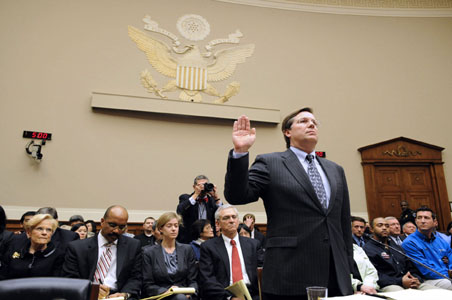
Jammed and sticking gas pedals have forced Toyota to recall millions of vehicles and to appear before often-hostile committees of the U.S. House and Senate the past few weeks whose members questioned whether the recalls should have been sooner and should cover more vehicle models. The problems also have tarnished Toyota's quality image and led it to offer dramatic incentives to recapture sales lost over safety worries.
MAP: Sudden acceleration complaints involving Toyota
PROFILES: They died in Toyotas, leaving many unanswered questions
PHOTOS: USA TODAY readers share their views of Toyota
Now Toyota faces a legal assault as lawsuits mount over everything from diminished resale value for used vehicles to endangering public safety. Thursday in San Diego, a federal judicial panel heard arguments on whether more than 100 lawsuits will be consolidated into one court.
Starting Oct. 5, Toyota began a series of recalls, now totaling 7.7 million Toyota and Lexus vehicles, to fix gas pedals that could stick, floor mats that could jam gas pedals, and what Toyota acknowledges are improperly designed, shaped and sized pedals themselves.
It hasn't helped Toyota's image that it recalled 55,000 vehicles for the floor-mat issue in 2007 and the automaker's Washington office later bragged in an internal presentation — made public in the congressional hearings — that it saved more than $100 million by negotiating such a small recall with NHTSA.
"If Toyota isn't fined by the government, I'd be very surprised," says Clarence Ditlow, head of the Center for Auto Safety, longtime observer, and frequent critic, of both the government safety agency and the auto industry. Automakers can be penalized up to $16.4 million for each recall not announced within five business days after a safety problem is identified.
The automaker previously has said it recalled vehicles promptly. And company President Akio Toyoda, in an unusual appearance by a foreign chief executive at a congressional hearing, testified last month that he didn't learn of acceleration problems until late last year, when the company was recalling vehicles.
NHTSA, which also came in for criticism at the hearings for not acting sooner, last month sent Toyota letters about three of the recent recalls. The letters insist on proof the automaker announced the recalls promptly. They also question whether the recalls have been broad enough and why some models with another potentially troublesome component — electronic throttle controls — weren't included. The letters — known as timeliness queries and recall queries — have the force of subpoenas but can yield more useful information because they can seek documents generally and needn't specify what the car company must submit, says the Department of Transportation, which oversees NHTSA.
NHTSA is "working to get to the bottom of the unintended-acceleration issue by undertaking a new review of possible causes, including potential electromagnetic interference (EMI)" with electronic throttle control systems, says DOT spokeswoman Olivia Alair.
Toyota has maintained, and repeated in a public statement earlier this week, that it is "making an all-out effort to address the two specific mechanical causes of unintended acceleration we've identified" — mats and sticking pedals — and, "We're very confident that the system is not the cause of alleged unintended acceleration. Toyota engineers have repeatedly and rigorously tested our (electronic throttle controls) and have never found a single case of unintended acceleration due to a defect in the system."
Full News Here: http://www.usatoday.com/money/autos/2010-03-26-toyota26_CV_N.htm
Tags: World Largest Automobile Company Toyota, Toyota Cars, Automobile Company Toyota, Auto Mobile Company Toyota, Toyota Vehicles, Top Speed Car of Toyota, Automobile Maker Company Toyota, Toyota Car Company, New Top Speed Series Cars of Toyota, Toyota Top Speed Cars Series, News Series of Toyota, Toyota New Top Speed Cars

In a pattern almost unbroken since 2004, speed control problems are a higher proportion of Toyota's driver complaint filings than they are for other big automakers, a USA TODAY analysis of National Highway Traffic Safety Administration data from 2000 to mid-March of this year has found.
The analysis showed 11.7% of the vehicle components named in driver complaints to NHTSA about Toyota-made vehicles in that period were in the safety agency's "vehicle speed control" category. That is the NHTSA complaint category that covers most incidents of unintended acceleration, the problem underlying Toyota's huge recalls in recent months.
The five others among the top six automakers in the U.S. market ranged from General Motors' 2.2% to Ford's 4.8% over the decade.
The analysis excluded the "cruise control" category that's one of several "speed control" classifications. Those weren't directly related to the current issue of stuck gas pedals.
The analysis is similar to an approach used by safety officials to spot troubling trends. It suggests that Toyota's problems with sticking and jammed gas pedals could have been spotted earlier.
Toyota said that it disputes USA TODAY's analysis, because the NHTSA data are polluted by what Toyota says would be "a variety of non-UA (unintended-acceleration) events" listed in NHTSA's "vehicle speed control" category. The automaker said it "disagrees with both the methodology and implications suggested by USA TODAY's analyses," and said, "Toyota has substantially superior performance in terms of complaints to NHTSA."
Jammed and sticking gas pedals have forced Toyota to recall millions of vehicles and to appear before often-hostile committees of the U.S. House and Senate the past few weeks whose members questioned whether the recalls should have been sooner and should cover more vehicle models. The problems also have tarnished Toyota's quality image and led it to offer dramatic incentives to recapture sales lost over safety worries.
MAP: Sudden acceleration complaints involving Toyota
PROFILES: They died in Toyotas, leaving many unanswered questions
PHOTOS: USA TODAY readers share their views of Toyota
Now Toyota faces a legal assault as lawsuits mount over everything from diminished resale value for used vehicles to endangering public safety. Thursday in San Diego, a federal judicial panel heard arguments on whether more than 100 lawsuits will be consolidated into one court.
Starting Oct. 5, Toyota began a series of recalls, now totaling 7.7 million Toyota and Lexus vehicles, to fix gas pedals that could stick, floor mats that could jam gas pedals, and what Toyota acknowledges are improperly designed, shaped and sized pedals themselves.
It hasn't helped Toyota's image that it recalled 55,000 vehicles for the floor-mat issue in 2007 and the automaker's Washington office later bragged in an internal presentation — made public in the congressional hearings — that it saved more than $100 million by negotiating such a small recall with NHTSA.
"If Toyota isn't fined by the government, I'd be very surprised," says Clarence Ditlow, head of the Center for Auto Safety, longtime observer, and frequent critic, of both the government safety agency and the auto industry. Automakers can be penalized up to $16.4 million for each recall not announced within five business days after a safety problem is identified.
The automaker previously has said it recalled vehicles promptly. And company President Akio Toyoda, in an unusual appearance by a foreign chief executive at a congressional hearing, testified last month that he didn't learn of acceleration problems until late last year, when the company was recalling vehicles.
NHTSA, which also came in for criticism at the hearings for not acting sooner, last month sent Toyota letters about three of the recent recalls. The letters insist on proof the automaker announced the recalls promptly. They also question whether the recalls have been broad enough and why some models with another potentially troublesome component — electronic throttle controls — weren't included. The letters — known as timeliness queries and recall queries — have the force of subpoenas but can yield more useful information because they can seek documents generally and needn't specify what the car company must submit, says the Department of Transportation, which oversees NHTSA.
NHTSA is "working to get to the bottom of the unintended-acceleration issue by undertaking a new review of possible causes, including potential electromagnetic interference (EMI)" with electronic throttle control systems, says DOT spokeswoman Olivia Alair.
Toyota has maintained, and repeated in a public statement earlier this week, that it is "making an all-out effort to address the two specific mechanical causes of unintended acceleration we've identified" — mats and sticking pedals — and, "We're very confident that the system is not the cause of alleged unintended acceleration. Toyota engineers have repeatedly and rigorously tested our (electronic throttle controls) and have never found a single case of unintended acceleration due to a defect in the system."
Full News Here: http://www.usatoday.com/money/autos/2010-03-26-toyota26_CV_N.htm
Tags: World Largest Automobile Company Toyota, Toyota Cars, Automobile Company Toyota, Auto Mobile Company Toyota, Toyota Vehicles, Top Speed Car of Toyota, Automobile Maker Company Toyota, Toyota Car Company, New Top Speed Series Cars of Toyota, Toyota Top Speed Cars Series, News Series of Toyota, Toyota New Top Speed Cars